Understanding Your Machine Rebuild Options
When your well-cared-for machine begins to show wear and tear, it can be easy to jump to the conclusion that you need to trade it in for a newer one. However, that isn’t your only option. By rebuilding the entire machine, or select components, you can maximize your original investment by giving your productive and trusted machine a second life.
High-quality equipment like Caterpillar is built to be rebuilt, and manufacturers develop certification processes for dealers to follow when rebuilding machines or components. Certified rebuilt machines are held to a strict set of standards and typically have a higher resale value. Rebuild technicians undergo extensive training and have decades of equipment service experience. Commonly rebuilt machines include dozers, wheel loaders, compactors, excavators, motor graders, and articulated trucks.
In addition to keeping the machine you are comfortable operating, a rebuild restores its performance and productivity levels for a fraction of the cost of buying new. Rebuilds can enhance your machine with features introduced after it was manufactured, including technology updates, safety options, and performance upgrades. To protect your rebuild investment, you will receive a like-new warranty on all replaced parts.
Generally, dealers offer three types of rebuild options: complete machine rebuilds, powertrain rebuilds, and component rebuilds. Below is an overview of the different rebuild options.
Complete Machine Rebuilds
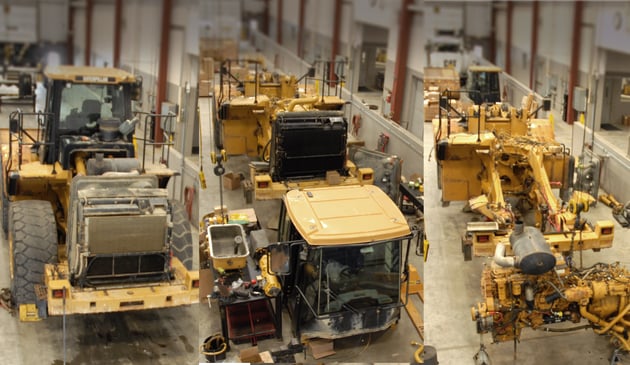
Complete machine rebuilds return the entire machine to good-as-new condition by replacing approximately 7,000 parts with new, remanufactured, or repaired parts. Unlike a typical overhaul, components such as linkage pins, shaft bearings, and electronic control modules are reconditioned during complete rebuilds. Due to the extensive amount of work performed, complete machine rebuilds receive a new serial number, along with an updated cab and fresh paint.
Powertrain Rebuilds
Powertrain rebuilds return a machine’s powertrain components to like-new condition, including the radiator, engine, transmission, torque converter, final drive, and axle. Approximately 3,000 parts are replaced with new, remanufactured, or repaired parts. During a powertrain rebuild, you can also recondition other areas of the machine, such as the operator station, hydraulics, or undercarriage, if needed.
Component Rebuilds
Component rebuilds focus on restoring a specific system or major assembly so you can address the areas that matter most to your operation, timeline, and budget. Rather than rebuilding the entire machine or the full powertrain, your dealer targets one or more high-value components and returns them to like-new performance using a mix of new, remanufactured, and repaired parts.
Common component rebuild candidates include:
Because component rebuilds are more targeted, they’re often the right fit when the machine is structurally sound and still meeting your production needs, but one system has become a bottleneck due to wear, leakage, overheating, or declining performance.
How to Choose the Right Rebuild Option
The best rebuild path depends on how you use the machine, what condition it’s in today, and what you expect from it over the next several years. A complete machine rebuild is typically considered when you want to reset the life of the entire machine, while a powertrain or component rebuild is ideal when the rest of the machine remains in solid operating condition.
When you’re weighing your options, it helps to think through a few practical questions:
Many owners also find it useful to compare the cost of rebuilding against the cost of acquiring a replacement machine, including the effects of lead times, insurance, property tax, and the learning curve of a different unit. A rebuild can also help you avoid the disruptions that come with switching models or changing attachments and setup.
What the Rebuild Process Typically Looks Like
While the exact steps vary by machine and rebuild level, most rebuild programs follow a structured process designed to protect quality and keep you informed. This usually begins with an initial evaluation to determine the machine’s overall condition and confirm whether a rebuild is appropriate.
A rebuild assessment often includes:
Once scope is confirmed, the machine or component is disassembled, cleaned, and inspected. Parts that meet reusability requirements may be repaired or reconditioned, and parts that don’t meet spec are replaced. After reassembly, systems are adjusted, calibrated, and tested to verify performance.
Technology, Safety, and Comfort Updates
One of the most valuable aspects of a rebuild is the opportunity to modernize an older machine with updates that make it easier to operate, safer on the jobsite, and more consistent in production. Depending on the model and rebuild type, upgrades may include:
These updates can be particularly helpful if you’re looking to standardize controls across your fleet, improve operator confidence, or capture more machine health and utilization data.
Planning for Downtime and Scheduling
Because rebuilds are a significant service event, timing is important. Many customers plan rebuild work around seasonal slowdowns, project transitions, or periods when backup equipment is available. If the machine is essential to your day-to-day production, your dealer may be able to help you coordinate alternatives, such as rental or short-term fleet solutions, while the work is being completed.
For component-level work, you may have additional options to minimize downtime, including pre-planning parts availability, staging work in phases, or coordinating service in a way that aligns with your maintenance windows.
Warranty and Long-Term Value Considerations
Rebuild programs are designed to protect your investment, and warranty coverage is an important part of that protection. Warranty terms vary depending on rebuild type and parts used, but the intent is consistent: critical replaced parts are covered so you can return to work with confidence.
Beyond warranty, rebuilding can support long-term value by extending the useful life of the asset, helping maintain consistent operating characteristics for your crews, and preserving the machine’s role within your fleet. For many owners, the ability to match the rebuild scope to the machine’s actual condition is what makes this approach especially practical.
In the next step, your dealer can review inspection findings with you and outline a recommended rebuild path based on the machine’s application, current wear patterns, and the performance outcomes you want to achieve.